 How-to
7 Steps to Sell Old Sports Cards Without Getting Ripped Off
Last Updated: November 19, 2026
Quick Summary
To sell old sports cards without getting ripped off, sort your collection by sport, year, and set, then price cards using completed sales rather than asking prices. Decide between selling singles or a collection by running the net proceeds test, and choose a platform or local card shop that matches your cards.
- Sort by sport, year, and set, keeping pre-1980 vintage apart from modern cards.
- Compare at least five recent sold listings, not one, when pricing cards.
- Condition drives card values more than most sellers expect.
- Singles earn more per card but cost time, fees, and shipping.
- Scams include overpayment, fake payment confirmations, and false damage claims.
Table of Contents
- Step 1: Sort and Assess What's in Your Collection
- Step 2: Learn How to Find Out What Sports Cards Are Worth
- Step 3: Decide Whether to Sell Sports Cards Individually or as a Collection
- Step 4: Choose How to Sell Old Sports Cards Online
- Step 5: Sell Sports Cards to a Local Card Shop
- Step 6: Understand Fees, Taxes, and What You Actually Keep
- Step 7: Avoid Scams and Get Paid Safely
- What Slows Most Sellers Down
- Frequently Asked Questions
Step 1: Sort and Assess What's in Your Collection
Learning how to sell old sports cards starts with sorting: you cannot price what you have not sorted. Sort by sport, year, and set, keeping pre-1980 vintage apart from modern cards, they sell in completely different ways.
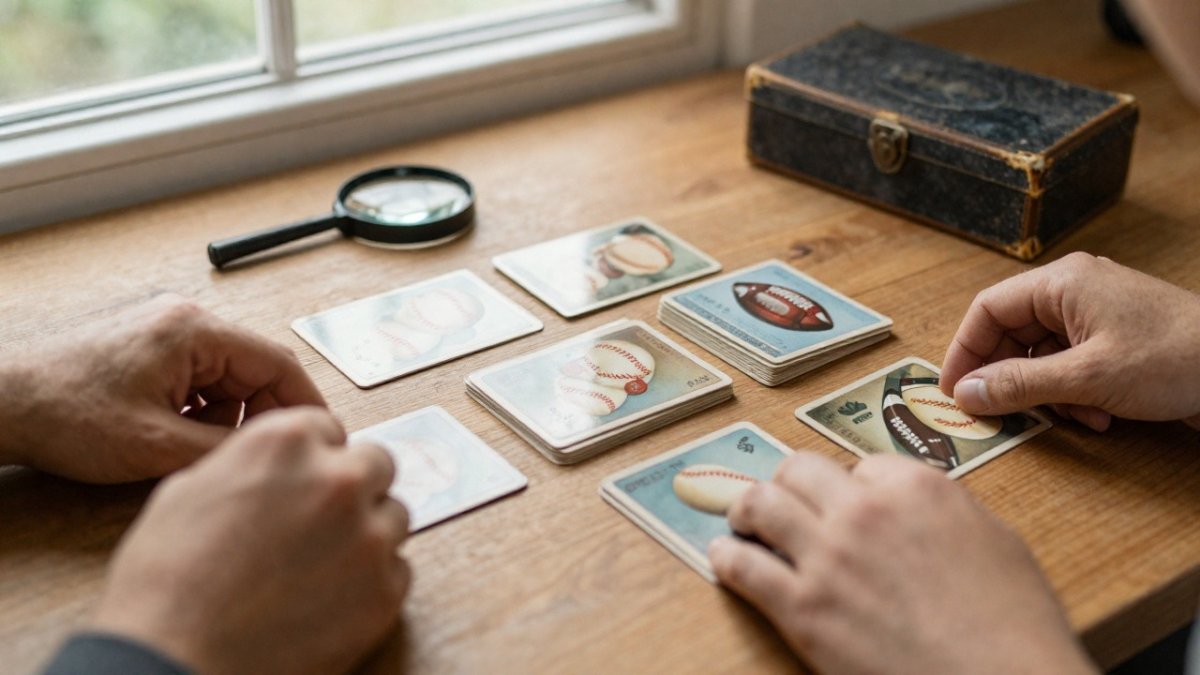
Handle vintage cards by the edges only; corner wear and surface scratches can reduce value.
Step 2: Learn How to Find Out What Sports Cards Are Worth
What sports cards are worth comes down to one source of truth: completed sales, not asking prices.
- Search the player name, card year, set name, and card number together
- Filter for sold listings only, then sort by most recent
- Compare at least five recent sales, not one
- Note the card's condition against the sold examples
- Discount your number for any flaws you can see
Condition drives card values more than most sellers expect, a creased corner can move a card into a lower grade band worth real money. The PSA grading standards guide explains how graders score centering, corners, edges, and surface.
| What You See | Rough Grade Band | Selling Approach |
|---|---|---|
| Sharp corners, centered, clean surface | High grade candidate | Consider grading, sell as single |
| Minor edge wear, decent centering | Mid grade | Sell raw as a single |
| Creases, rounded corners, surface wear | Low grade | Bundle or sell in bulk |
Step 3: Decide Whether to Sell Sports Cards Individually or as a Collection
Selling sports cards individually or as a collection is a math problem, not a preference. Singles earn more per card but cost time, fees, and shipping; a collection sale pays out once, in cash, on the spot. Run the net proceeds test: subtract fees, supplies, postage, and your hours, many sellers find a bulk collection nets more through a local card shop.
Step 4: Choose How to Sell Old Sports Cards Online
If you decide to sell old sports cards online, pick the platform that matches the cards: auction sites reward rare, desirable cards, while fixed-price marketplaces suit mid-range singles.
Shipping is where online sales quietly lose money. The USPS shipping guidelines cover packaging and tracking basics.
Step 5: Sell Sports Cards to a Local Card Shop
Selling sports cards to a local card shop can be a direct route to cash for many inherited or childhood collections. Come prepared: know your star cards, have the box sorted, and ask what the offer is based on. The card case deals in both new and used sports cards and trading card game singles, so a mixed collection can be discussed with the shop directly.
Step 6: Understand Fees, Taxes, and What You Actually Keep
The number on the sale is not the number in your pocket: marketplaces take a commission, payment processing takes a cut, and shipping eats the rest. Depending on your situation, profit from selling cards may need to be reported. The IRS guidance on hobby versus business income explains how the IRS treats hobby and business income differently. Keep records of what you paid, what you sold, and when. This is general information, not tax advice, so check with a qualified tax professional.
Step 7: Avoid Scams and Get Paid Safely
Scams target sellers too: overpayment, fake payment confirmations, and buyers who claim a card arrived damaged to force a refund. For high-value singles, some sellers prefer consignment through a trusted shop to selling alone, since it can reduce direct dealings with strangers.
What Slows Most Sellers Down
The sellers who get burned rarely priced a card wrong. They skipped sorting, trusted an asking price, or shipped before the money cleared. Sort first, price from real sales, and choose your channel based on net proceeds rather than the headline number.
Selling a collection should not feel like a gamble. At The card case, we evaluate inherited and childhood collections in person, deal in both new and used sports and trading card game singles, and explain exactly how every offer is built. Bring your box in, and we will sort it with you and give you a straight answer on what it is worth.
Frequently Asked Questions
Are old sports cards worth anything?
Some are, most aren't. Value comes down to four things: the player, the card year and set, the condition, and whether it's a rookie card or a short-printed card. A 1988 common card is usually worth pennies, while a key rookie card from the same era can sell for hundreds. Check completed sales on an online marketplace for your exact card, then compare condition before assuming yours is worth the same. Bulk commons are usually sold by the box, not the card.
Is there a market for old sports cards if mine aren't valuable?
Yes, but it's a bulk market. Low-value cards from the 1980s and 1990s, often called junk wax era cards, still move as box lots or repacks. A local card shop or collection buyer will often make an offer on the whole box even when no single card stands out. Expect a much lower per-card payout than for star cards, and be upfront about what's in the box so you get a fair offer instead of a rejected one.
Should I sell sports cards individually or as a collection?
Sell individually when you have star cards, graded cards, or rookie cards that will attract their own buyers. Sell as a collection when the bulk of the box is low-value and the time and fees of listing each card would eat the profit. A common approach is to pull out the top 10 to 20 cards to sell one at a time, then offer the remainder as a single lot to a local card shop or collection buyer.